 ADD TO CART
Most people pick running shoes by colour or by what a friend wears. That works sometimes. A better method takes about ten minutes and answers six questions in order, from surface to replacement.
This guide walks through each step, then maps common needs to shoes we stock in Kuwait from Brooks, Hoka, Saucony, Mizuno, On and Vivobarefoot. If you are new to running, steps 1 to 4 matter most.
Step 1: Where will you run?
The surface decides the outsole and the upper before anything else.
- Road and pavement. A road running shoe with rubber in the high-wear zones. This covers the Gulf Road, park paths and most city routes.
- Treadmill. Any road shoe works. Outsole wear is lower, so a softer or lighter shoe is fine.
- Trail and sand. A trail shoe with deeper lugs and a tougher upper, such as the On Cloudsoma or Vivobarefoot Primus Trail.
- Gym and mixed use. Very soft, tall running shoes feel unstable for lifting. A flatter shoe like the Vivobarefoot Motus Strength suits that work better.
If you mostly walk, read our walking shoes guide instead. The priorities shift toward comfort over long hours.
Step 2: How much cushioning do you want?
Cushioning is about how much foam sits under your foot and how it feels. More foam is not automatically better. It is a trade between protection and ground feel.
Max cushion
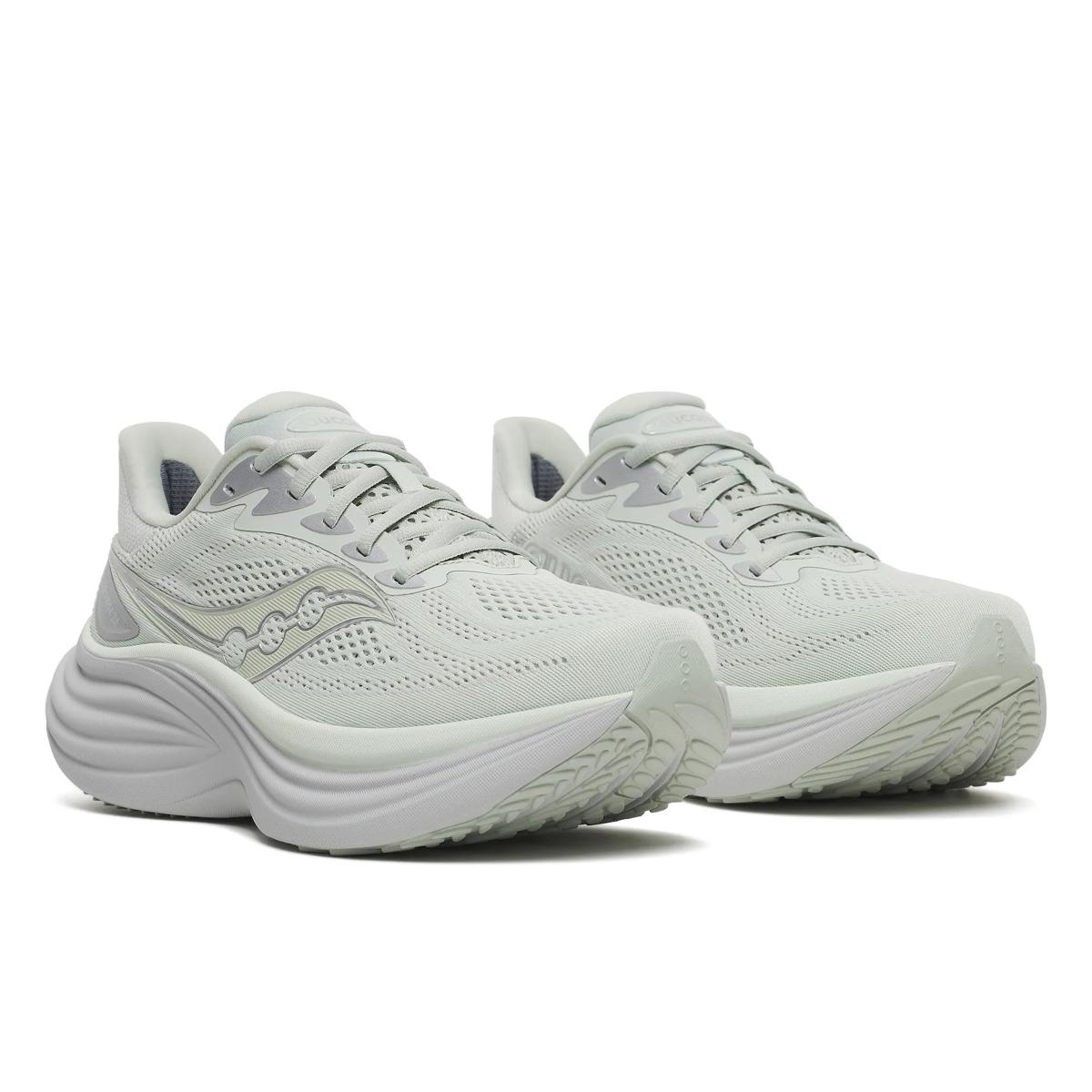
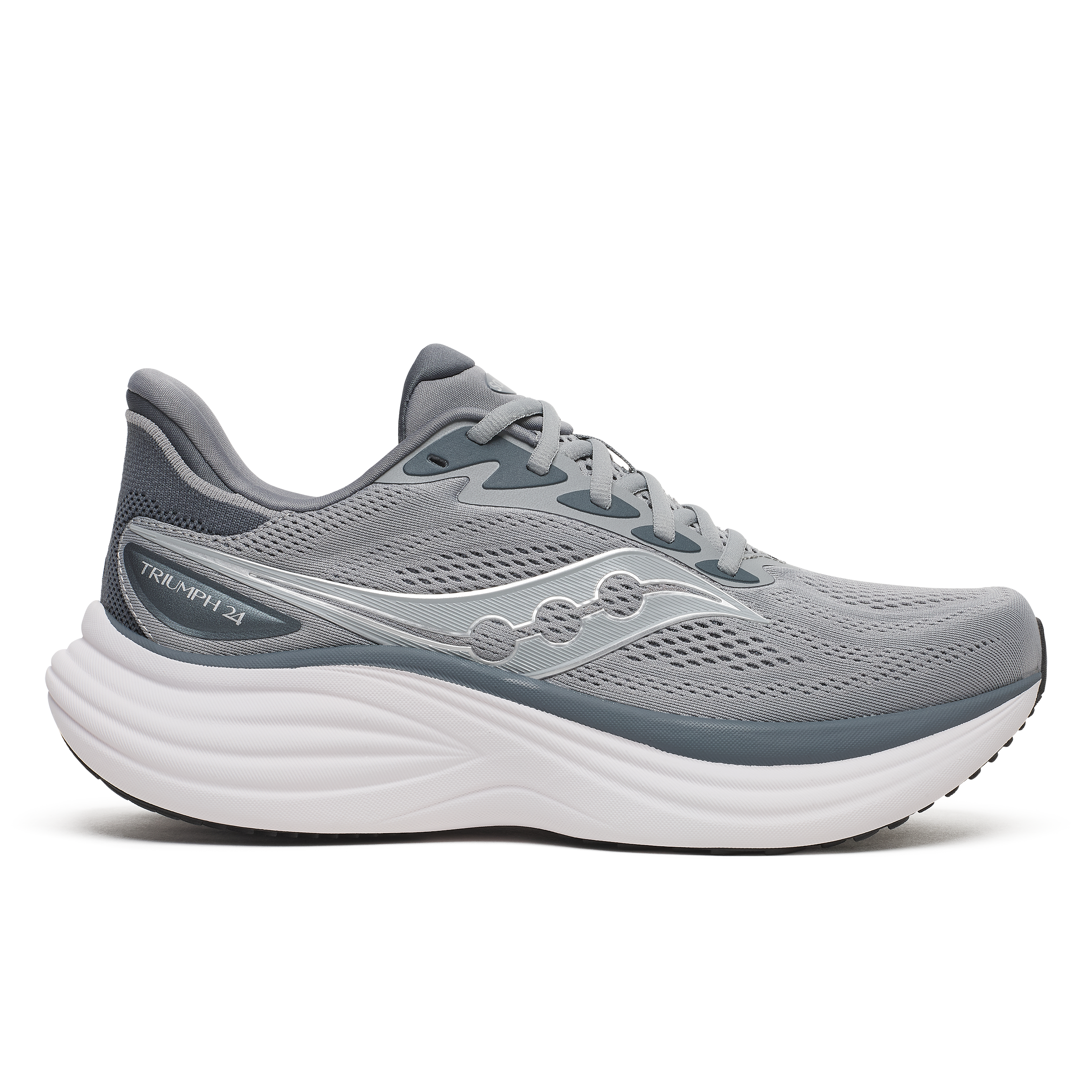
Tall, soft midsoles for long runs, recovery days, heavier runners and people on their feet all day. Examples: Hoka Bondi 9, On Cloudmonster, Saucony Triumph 23 and 24, Brooks Glycerin Max.
Balanced daily trainers
Enough foam for most runs, still light enough to pick up the pace. This is the safe default for beginners. Examples: Brooks Ghost 17, Mizuno Wave Rider 29, Hoka Mach 6, On Cloudsurfer Next.
Firm and fast
Lighter shoes and plated racers for workouts and race day. The Brooks Hyperion Elite 5 uses a carbon plate and a PEBA-based foam. Most runners should own a daily trainer before buying one of these.
Minimal
Barefoot shoes have a thin, flexible sole and almost no cushioning. They need a slow transition. See our barefoot shoes guide.
Neutral vs stability shoes: which do you need?
A neutral shoe lets your foot move as it naturally does. A stability shoe adds structure, such as firmer foam, a wider base or guide rails, to limit the foot rolling inward (overpronation).
Most runners do well in neutral shoes. Consider stability if:
- your ankles feel like they collapse inward late in a run,
- your old shoes wear heavily on the inner edge,
- a physiotherapist or podiatrist has advised support,
- neutral shoes have felt wobbly on long runs.
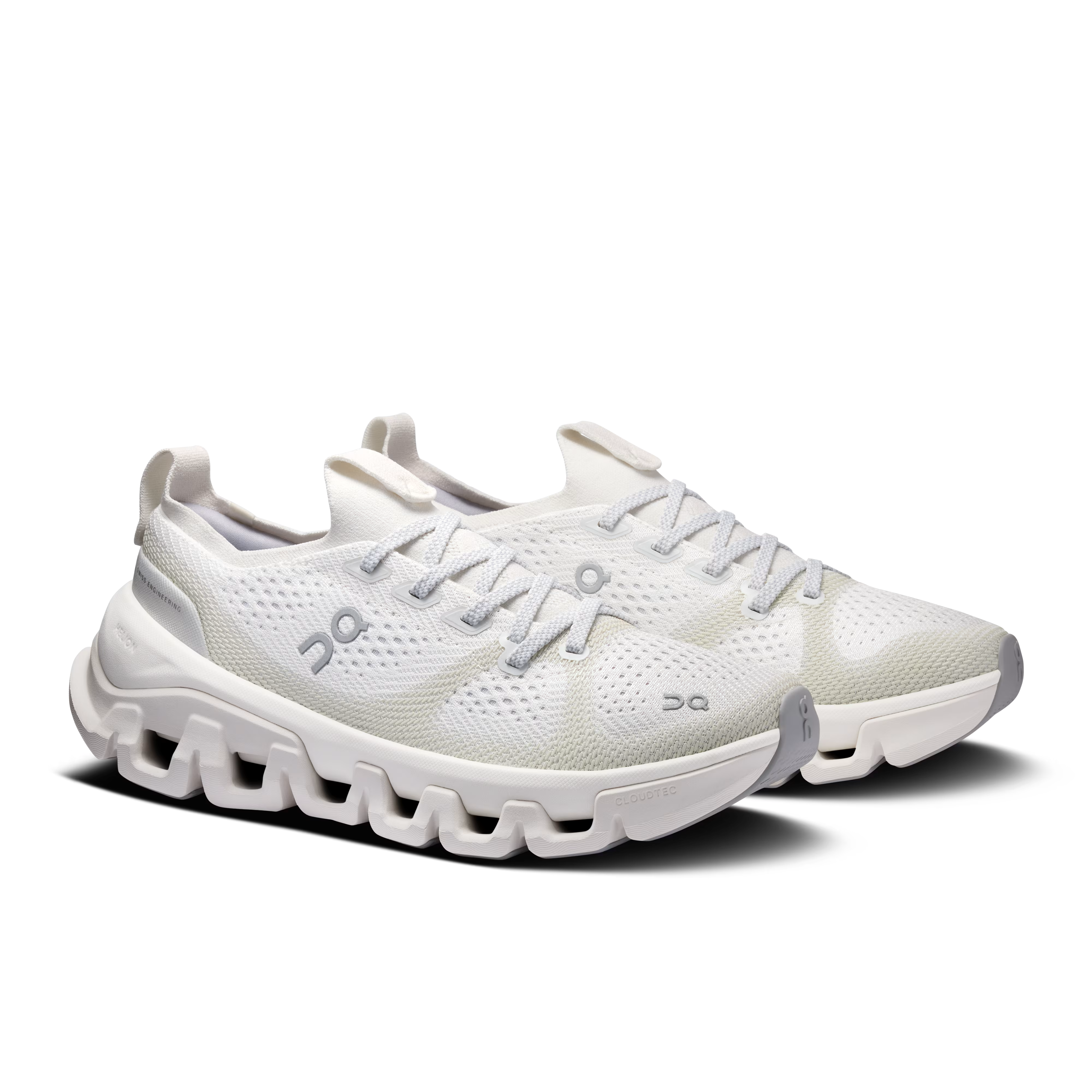
Stability options in stock include the Saucony Hurricane 26, the Hoka Arahi 8 with its H-Frame support, and the On Cloudflyer 5 and Cloudrunner 3. If you are unsure, try one neutral and one stability shoe back to back and walk briskly in both. The one you stop noticing is usually right.
How should running shoes fit?
Fit causes more problems than any technology choice. Use these checks:
- Length. About a thumb's width between your longest toe and the end of the shoe. Feet swell on runs, more so in heat.
- Width. Toes should spread without pressing on the sides. If the little toe rubs, go to a roomier model rather than a longer size.
- Heel. The heel should not lift much when you walk. Use the last eyelet for a heel-lock lace if it slips.
- Midfoot. Snug, not tight. You should be able to lace without pressure on the top of the foot.
- Socks. Try shoes with the socks you run in.
Try shoes later in the day when your feet are larger. Sizes vary between brands, so do not assume your Hoka size equals your On size. You can try pairs at our stores in The Avenues, Marina Mall and Salhia Complex, and online orders can be exchanged within 14 days at any Shoebox outlet in Kuwait.
What is running shoe drop and does it matter?
Drop (also called offset) is the height difference between the heel and the forefoot, measured in millimetres. A 10 mm drop means the heel sits 10 mm higher than the ball of the foot.
| Drop range | Typical feel | Who it often suits |
|---|---|---|
| 0 mm (zero drop) | Flat, like standing barefoot | Runners used to minimal shoes, after a gradual transition |
| Low, about 1 to 6 mm | More load on calves and Achilles | Midfoot strikers, runners who want a flatter feel |
| Traditional, about 8 to 12 mm | Heel feels supported | Heel strikers, runners with tight calves |
Drop matters less than cushioning and fit. The main rule: change it slowly. Moving from a 10 mm shoe to a zero-drop shoe overnight puts sudden load on the calves and Achilles. Note that brands and reviewers sometimes measure drop differently, so treat listed numbers as a guide.
When should you replace running shoes?
A common guideline is every 500 to 800 km (about 300 to 500 miles). For someone running 25 km a week, that is roughly five to eight months.
Replace sooner if you notice:
- new aches in knees, hips or shins on easy runs,
- creases or flattened foam in the midsole,
- worn-through rubber or exposed foam on the outsole,
- a heel counter that has gone soft or tilted.
Heavier runners and minimal shoes reach the end sooner. Lighter runners and treadmill users often go further. Rotating two pairs helps foam recover between runs.
Which running shoe should I buy?
Use this table as a starting point. Every model listed is in stock in Kuwait.
| Your need | Shoes to try | Why |
|---|---|---|
| First pair, beginner | Brooks Ghost 17, Mizuno Wave Rider 29 | Balanced neutral daily trainers with a forgiving ride |
| Maximum comfort, long runs | Hoka Bondi 9, On Cloudmonster, Saucony Triumph 23 | Deep, soft midsoles |
| Light, versatile trainer | Hoka Mach 6, On Cloudsurfer Next | Lighter and quicker for tempo and daily runs |
| Overpronation or need support | Saucony Hurricane 26, Hoka Arahi 8, On Cloudflyer 5 | Added structure to limit inward roll |
| Race day | Brooks Hyperion Elite 5 | Carbon plate and responsive foam |
| Trail and desert routes | On Cloudsoma, Vivobarefoot Primus Trail | Grippier outsoles |
| Natural, minimal feel | Vivobarefoot Primus Lite | Zero drop, thin flexible sole, wide toe box |
| Running plus all-day wear | On Cloud 6, Hoka Skyward | Comfortable for walking and errands |
For a longer breakdown by category, see the best running shoes in Kuwait for 2026, or browse the full range on our running shoes Kuwait page.
Choosing running shoes for Kuwait
Kuwait adds a few factors that guides written for cooler countries skip.
- Heat. Summer highs often pass 45°C. Pick a breathable mesh upper and light colours, and avoid waterproof versions for summer running. They hold heat.
- Swelling. Feet swell more in heat. If you are between sizes, the extra space of the larger size usually helps.
- Treadmill months. Many runners move indoors from June to September. A cushioned daily trainer handles treadmill work well.
- Sand and dust. Fine sand gets through open mesh. Knock shoes out after beach or desert runs and air-dry them away from direct sun.
Our guide to running in Kuwait heat covers timing, hydration and routes in more detail.
Frequently asked questions
What running shoes are best for beginners?
Beginners usually do best in a neutral, well-cushioned daily trainer such as the Brooks Ghost 17 or Mizuno Wave Rider 29. They handle easy runs, walking and treadmill sessions. If your ankles roll inward or a physio has advised support, try a stability shoe like the Saucony Hurricane 26 or Hoka Arahi 8 instead.
How do I know if I need a stability shoe?
Signs include heavy wear on the inner edge of old shoes, ankles that feel like they collapse inward late in runs, or advice from a physiotherapist or podiatrist. Many runners never need one. Trying a neutral and a stability shoe side by side and choosing the one that feels least noticeable is a practical test.
Should running shoes be a size bigger?
Many runners go up half a size from their everyday shoes. The goal is about a thumb's width of space in front of the longest toe, because feet swell during runs, especially in hot weather. Sizes vary between brands, so check the fit of each model rather than assuming one size works everywhere.
What drop should my running shoes have?
Most runners are comfortable in the traditional 8 to 12 mm range. Lower drops put more load on the calves and Achilles. Zero-drop shoes such as Vivobarefoot need a gradual transition over several weeks. The key is to change drop slowly rather than hunting for one ideal number.
How long do running shoes last?
A common guideline is 500 to 800 km. Heavier runners and minimal shoes tend to wear out sooner, while lighter runners and treadmill users often get more. Replace them earlier if you notice new aches on easy runs, flattened midsole foam or worn-through outsole rubber.
Can I exchange running shoes bought online in Kuwait?
Yes. Shoebox New York accepts returns and exchanges within 14 days of purchase at any Shoebox outlet in Kuwait. Card and KNET refunds reach your bank in 2 to 5 working days after the goods come back to the store. Delivery is free on orders over 20 KWD.